After the Russian revolutions of 1917 the Caucasian front collapsed, and Russian troops left Western Armenia. The burden of holding the front fell on Armenian volunteer and national units. In March 1918, under the Treaty of Brest-Litovsk, Soviet Russia ceded Kars, Ardahan and Batum (Batumi) to the Ottoman Empire. In April the Transcaucasian Seim proclaimed an independent Transcaucasian Federation, but Ottoman troops continued their advance, taking Kars and, on 15 May, Alexandropol (Gyumri).
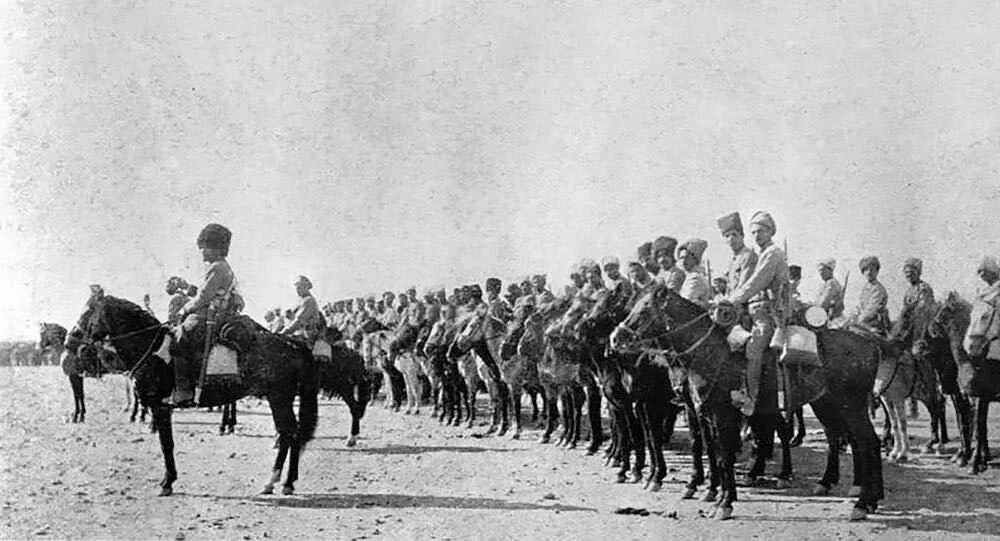
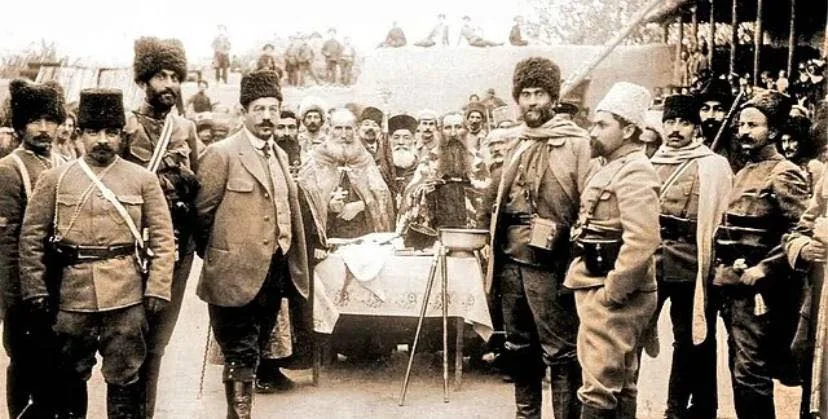
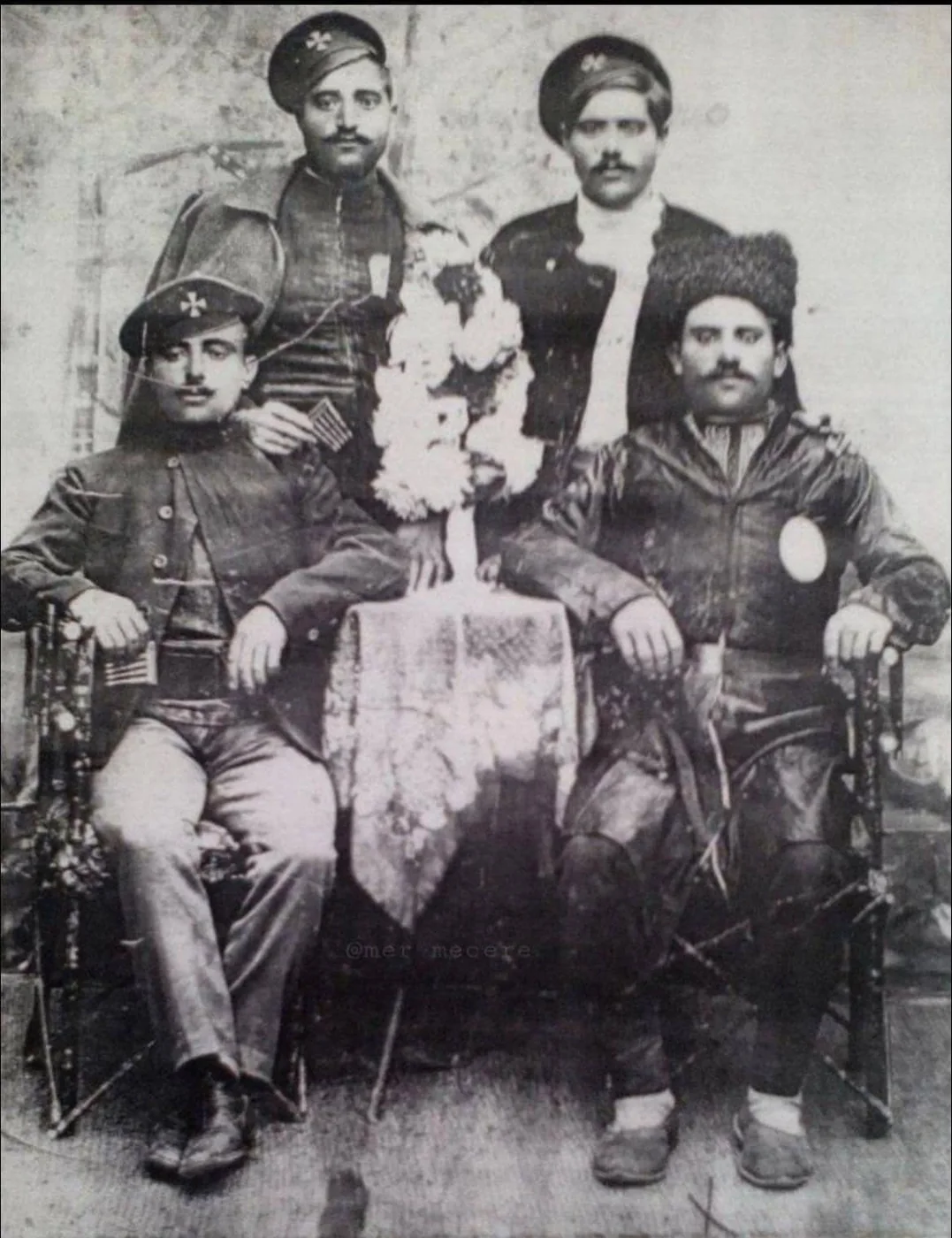
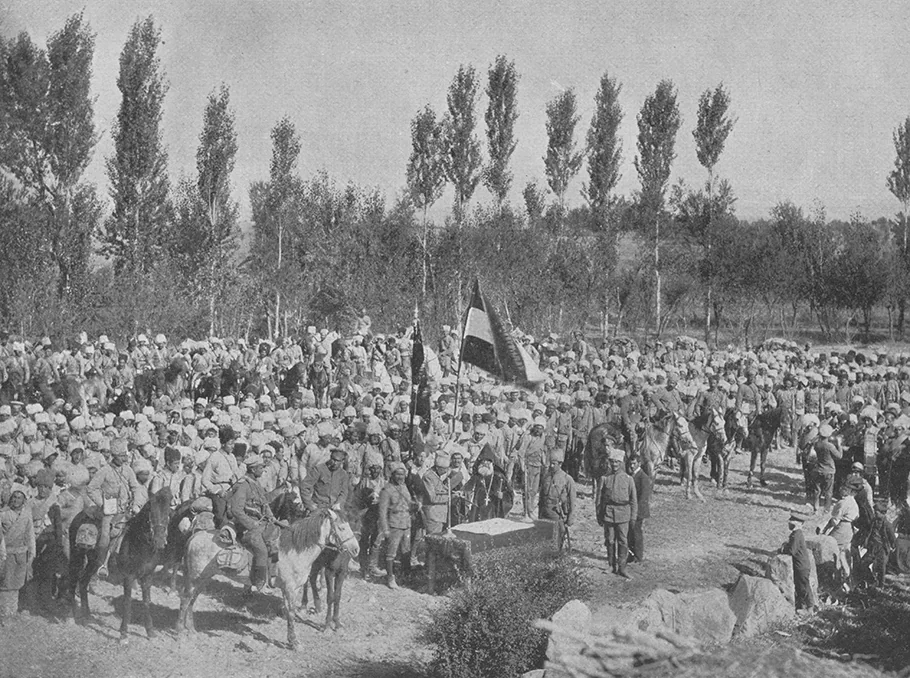
At the end of May 1918 the Ottoman army advanced in several directions towards Yerevan and Karakilisa (Vanadzor). Near Sardarapat, Armenian forces under the command of General Movses Silikyan and Daniel Bek-Pirumyan halted the enemy and forced it to retreat. At Bash-Aparan (Aparan) the detachments of Drastamat Kanayan (Dro) confronted another Ottoman group, while at Karakilisa the forces of General Tovmas Nazarbekyan fought heavy battles for several days and, although they withdrew, checked the enemy’s advance. Soldiers, volunteers, peasants, refugees, women and clergy took part in the fighting. These May battles saved the Armenian population of the Ararat Plain and made the creation of an Armenian state possible.
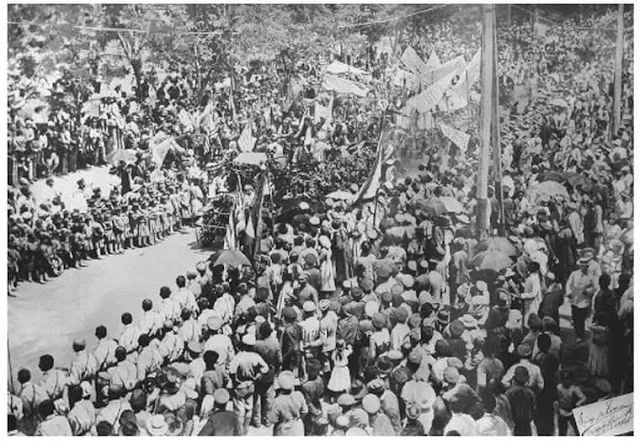
On 26 May 1918 Georgia declared independence and the Transcaucasian Federation collapsed; on 28 May Azerbaijan declared independence. On 28 May the Armenian National Council in Tiflis (Tbilisi) proclaimed itself the supreme authority of the Armenian provinces, and that day is regarded as the independence day of the Republic of Armenia. Under the treaty signed in Batum on 4 June, the Ottoman Empire recognised the small republic, whose territory was only about 10,000–12,000 square kilometres, consisting of Yerevan and the surrounding districts. In July the government moved to Yerevan, where Aram Manukyan had already organised local authority. Hovhannes Kajaznuni became the first prime minister, and on 1 August the parliament, the Council of Armenia, opened.
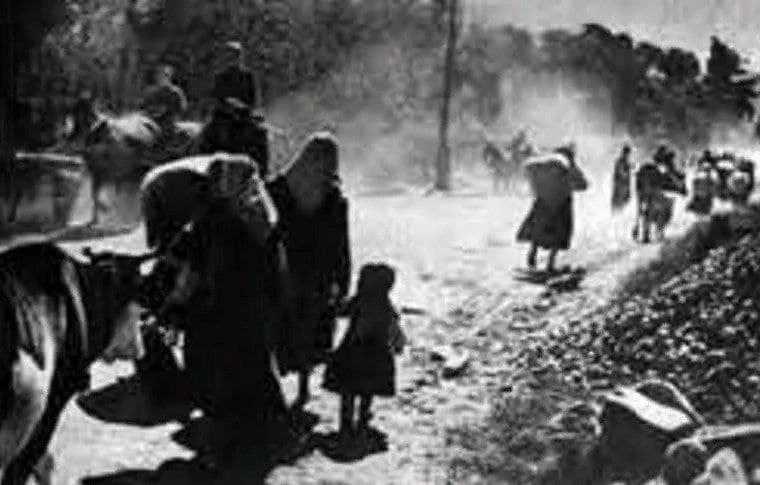
The first months of the new state were extremely hard. There were hundreds of thousands of refugees from Western Armenia in the country, famine and epidemics were widespread, and in the winter of 1918–1919 a considerable part of the population died. After the defeat of the Ottoman Empire in the First World War and the Armistice of Mudros in October 1918, Ottoman troops withdrew, and in 1919 Armenia established control over the Kars region. The borders with its neighbours were not settled: in December 1918 a brief war took place with Georgia, and there were disputes with Azerbaijan over Artsakh (Karabakh), Zangezur and Nakhijevan (Nakhchivan), accompanied by clashes and violence.
Despite the difficulties, the republic created state institutions. In June 1919 parliamentary elections were held in which women also had the right to vote, and the Armenian Revolutionary Federation won a majority in parliament. Governments were successively headed by Alexander Khatisyan, Hamazasp Ohanjanyan and Simon Vratsyan. In 1919 it was decided to found a state university, which opened at the beginning of 1920; schools were being opened, and a national army was created. On 28 May 1919 the Act of United Armenia was adopted, aiming to unite Eastern and Western Armenia. In January 1920 the Allied powers recognised the Republic of Armenia de facto.
On 10 August 1920 the Treaty of Sèvres was concluded; it was also signed by Avetis Aharonyan, head of the Armenian delegation. Under the treaty the Ottoman Empire recognised the independence of Armenia, and the border in the provinces of Van, Baghesh (Bitlis), Karin (Erzurum) and Trebizond (Trabzon) was to be determined by US President Woodrow Wilson. His arbitral award was presented in November, but by then no one was in a position to implement it. The treaty was not ratified and never came into force, since the national movement in Anatolia led by Mustafa Kemal rejected it.
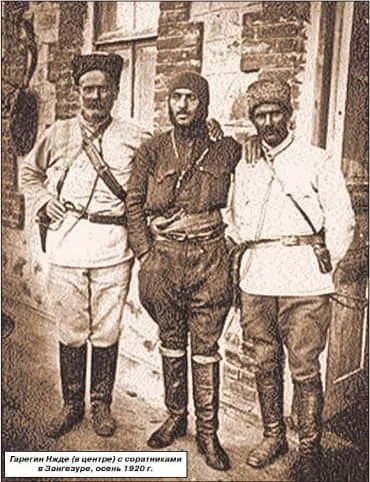
In September 1920 Kemalist forces under Kâzım Karabekir attacked Armenia. Kars fell on 30 October and Alexandropol in November, and the Armenian government was forced to ask for an armistice. At the same time the Red Army entered Armenia from Azerbaijan. Under an agreement signed in Yerevan on 2 December 1920, power was transferred to a Soviet government, and that same night the Armenian delegation in Alexandropol signed a treaty with Turkey on harsh terms, which the new authorities did not recognise. In Zangezur the resistance led by Garegin Nzhdeh continued until the summer of 1921. Thus ended the roughly 2.5-year history of the First Republic. Despite its short life, it restored Armenian statehood after centuries, and its symbols — the tricolour flag and the coat of arms — were restored by independent Armenia in the early 1990s.