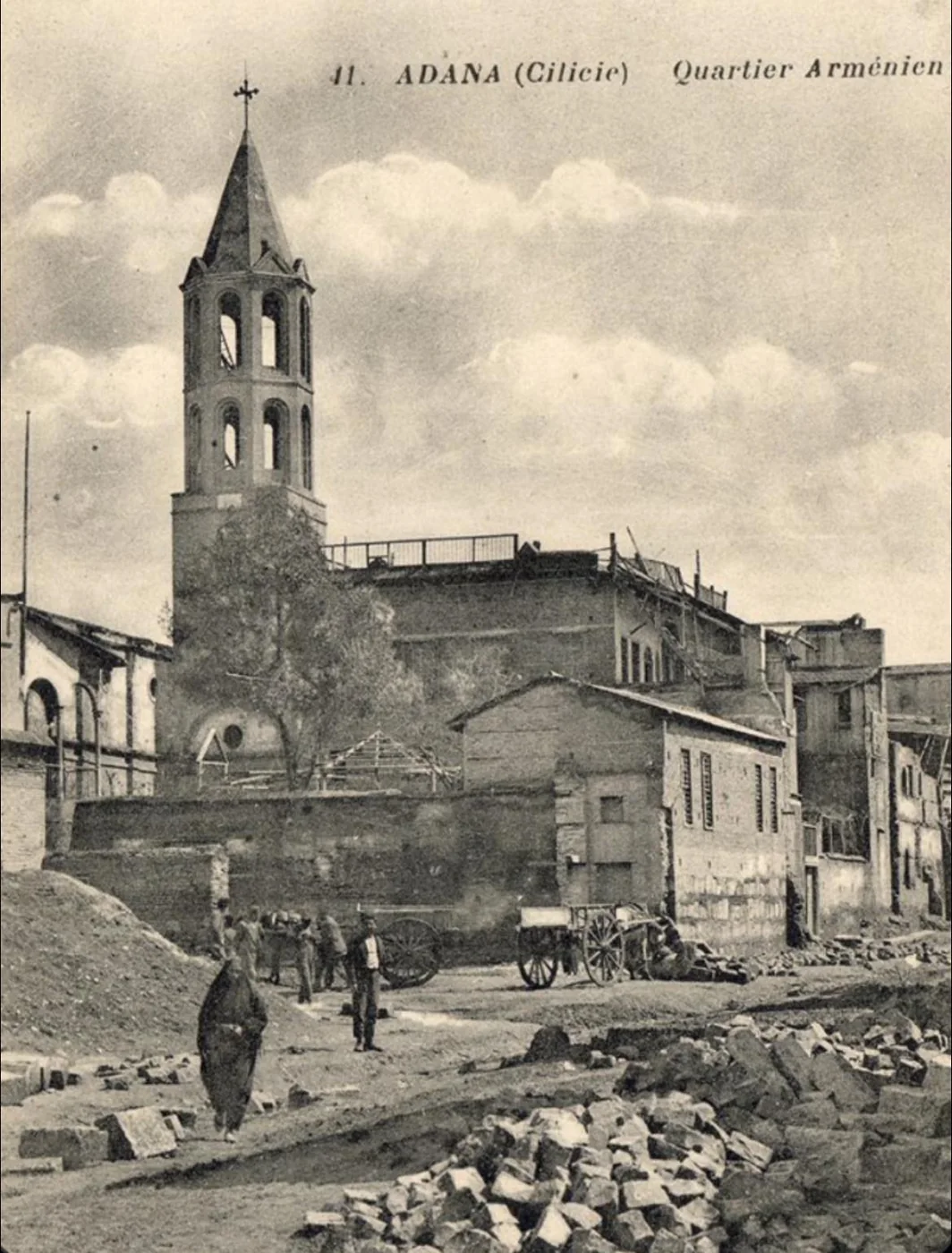
Cathedral of the Holy Mother of God, Adana
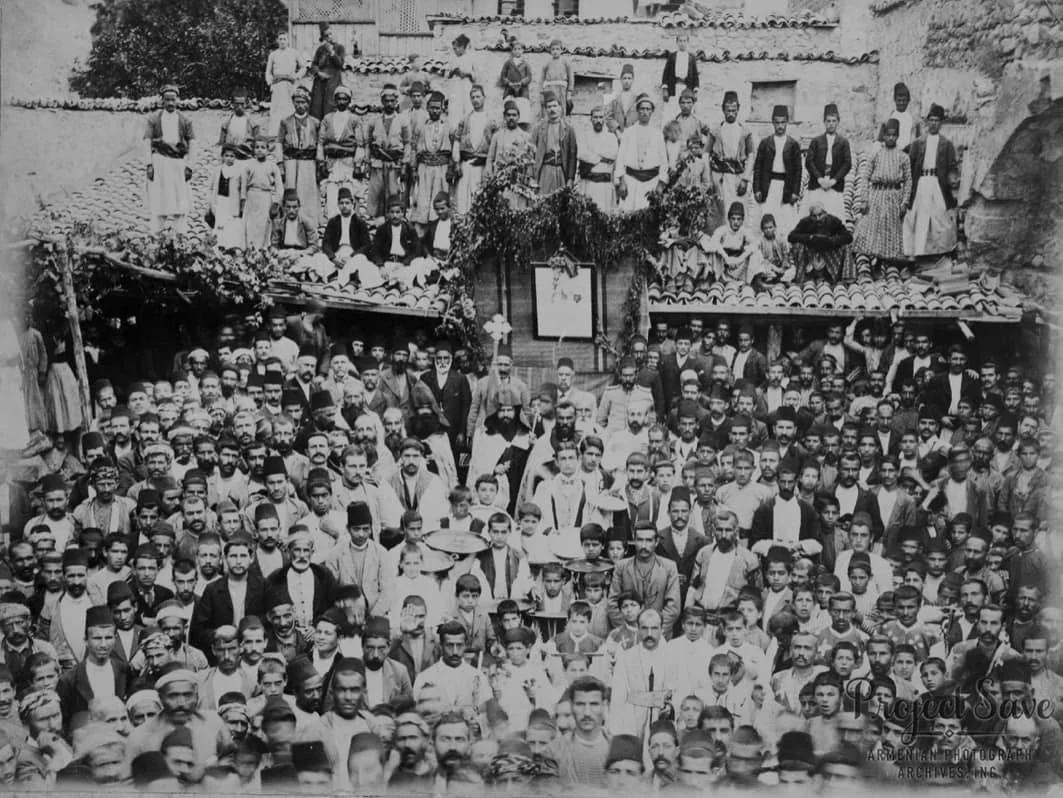
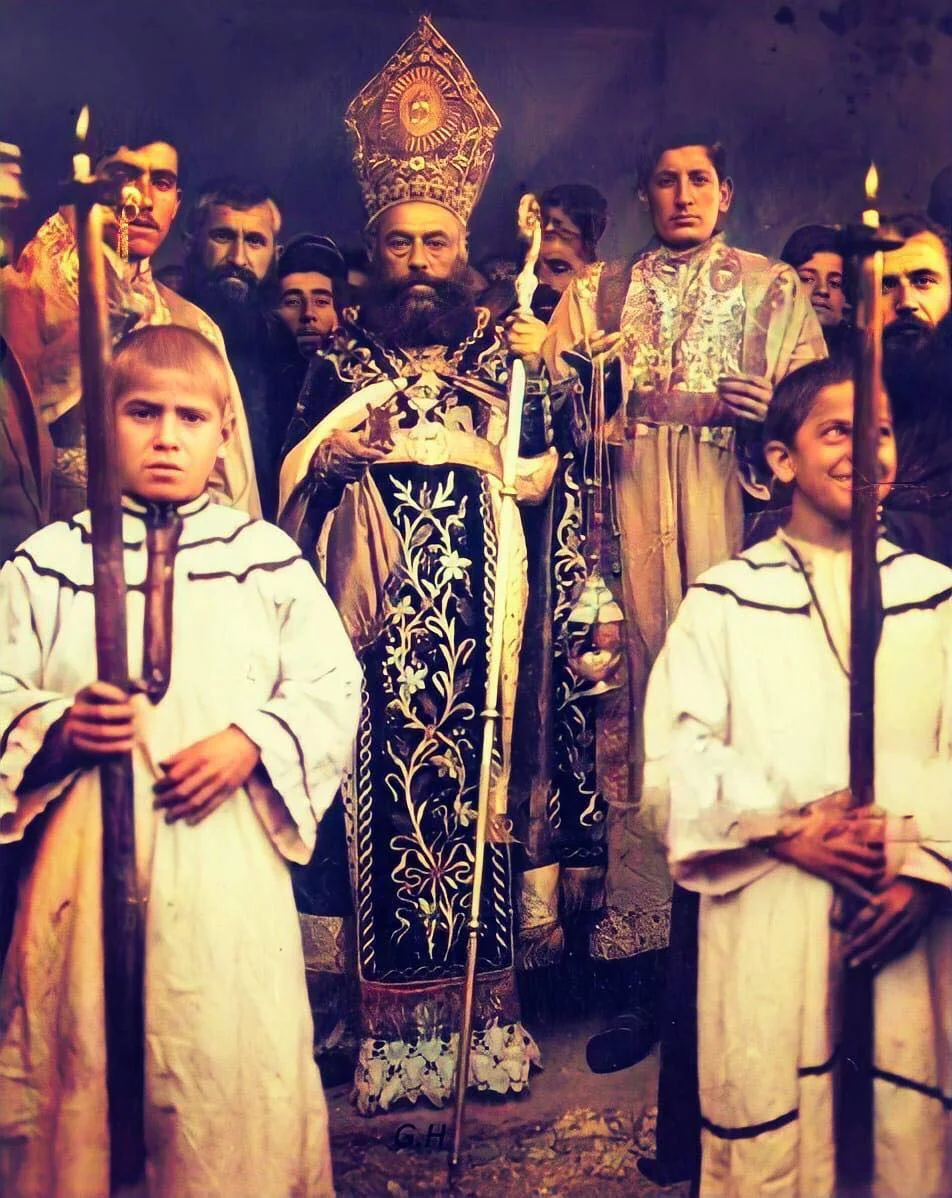
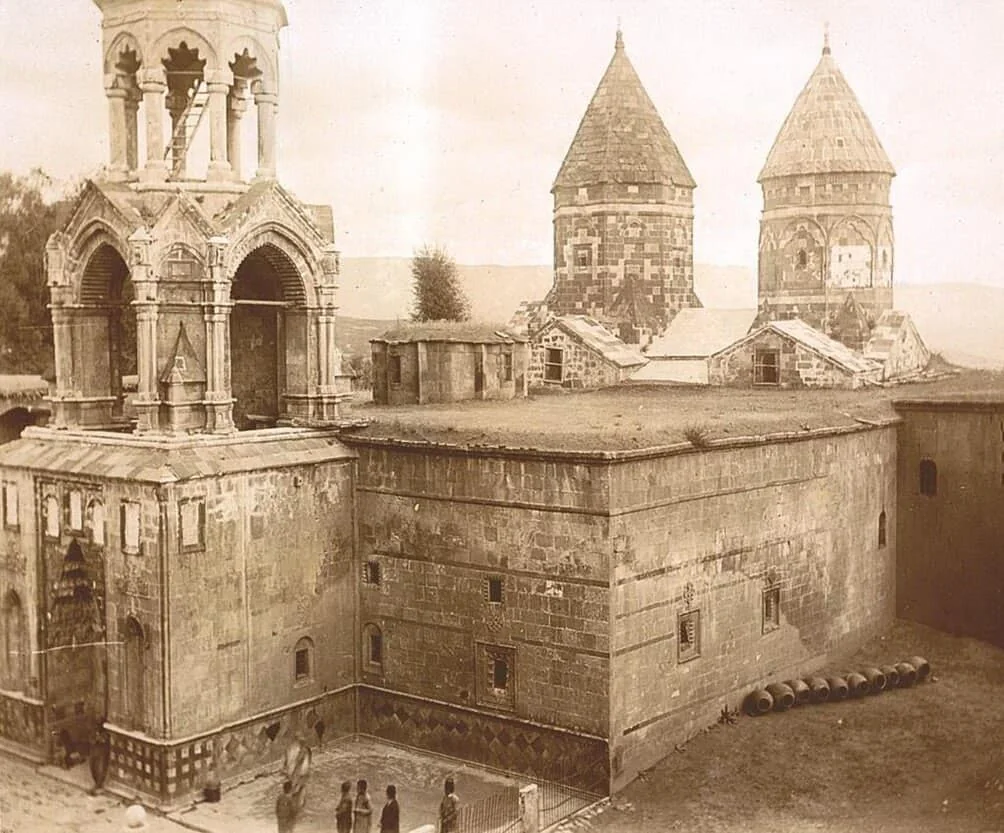
The Cathedral of the Holy Mother of God in Adana was built in 1840 by reconstructing an old church founded in the 13th century, in the time of the Armenian Kingdom of Cilicia. Because it stood on a hill, it was also called the “Upper Church”. In 1890 the Armenians of Adana, led by Archbishop Mkrtich Vehapetyan, celebrated its 50th anniversary, and in the early 1900s, under Archbishop Mushegh Seropyan, the cathedral was enlarged and became the seat of the diocesan prelate.
From the time of the Armenian Genocide the cathedral was first used as a military depot; in 1923 it was confiscated by the Turkish government, and in 1930 it was leased to the film entrepreneur Baki Tonguç, who opened a cinema hall in it. In the 1970s the cathedral was demolished and a branch of the Central Bank of Turkey was built on its site.
The postcard bears the French inscription “Adana (Cilicia), Armenian Quarter”. It shows a church with a tall bell tower, buildings, carts, people and heaps of stones.