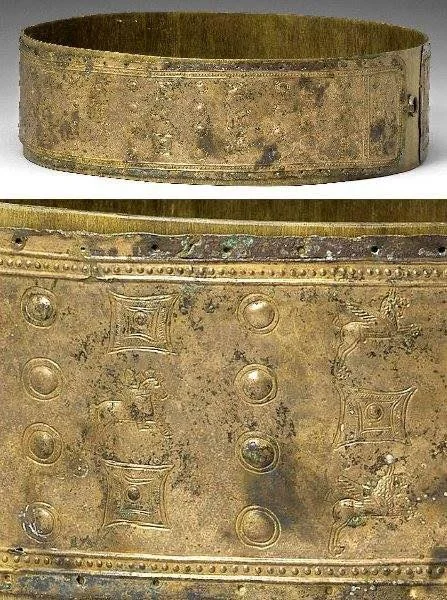
An Urartian bronze belt
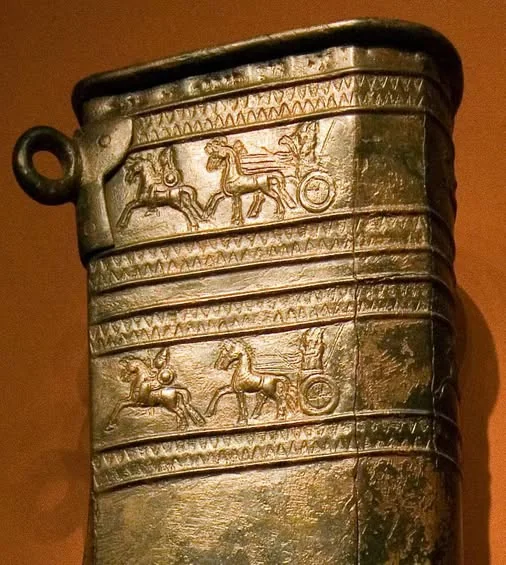
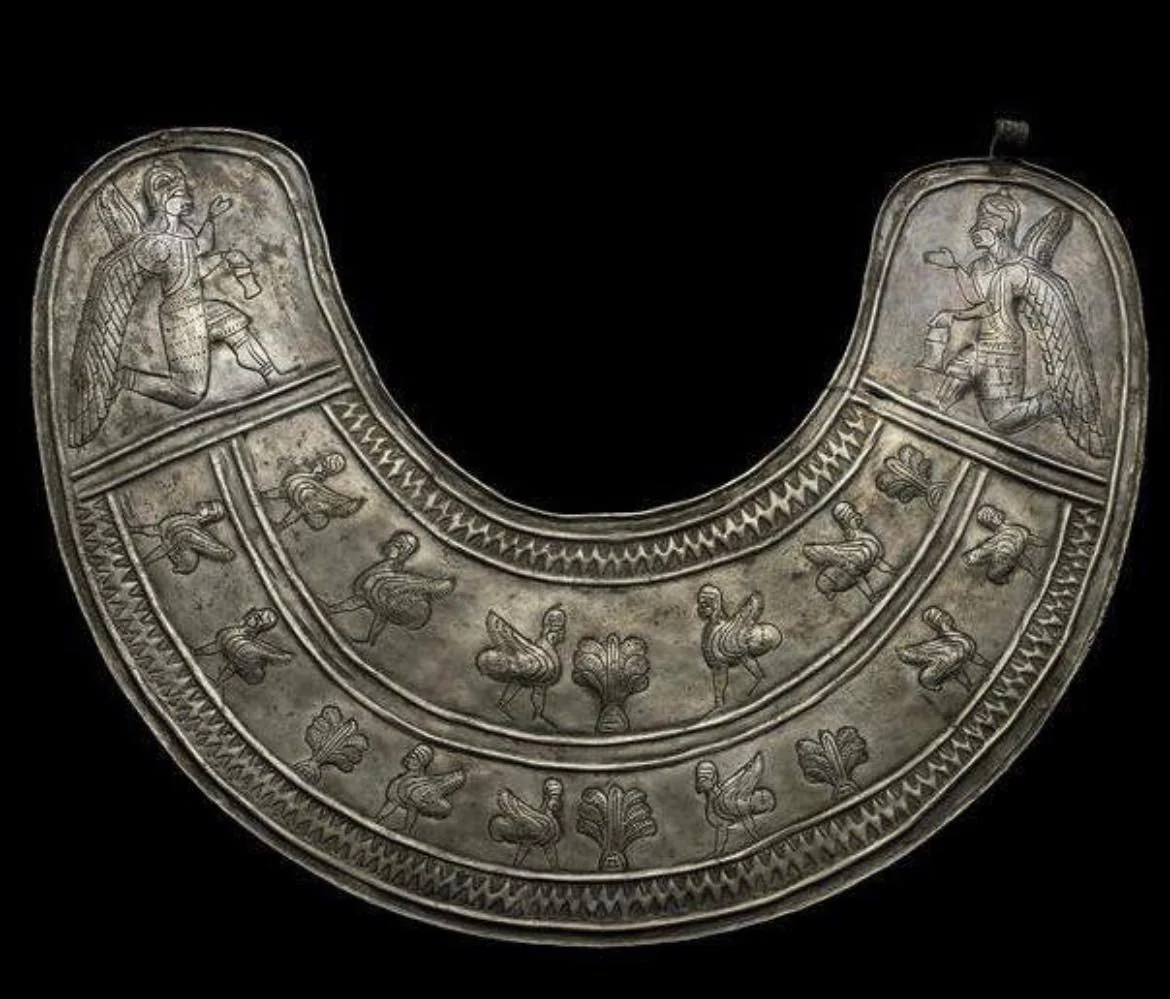
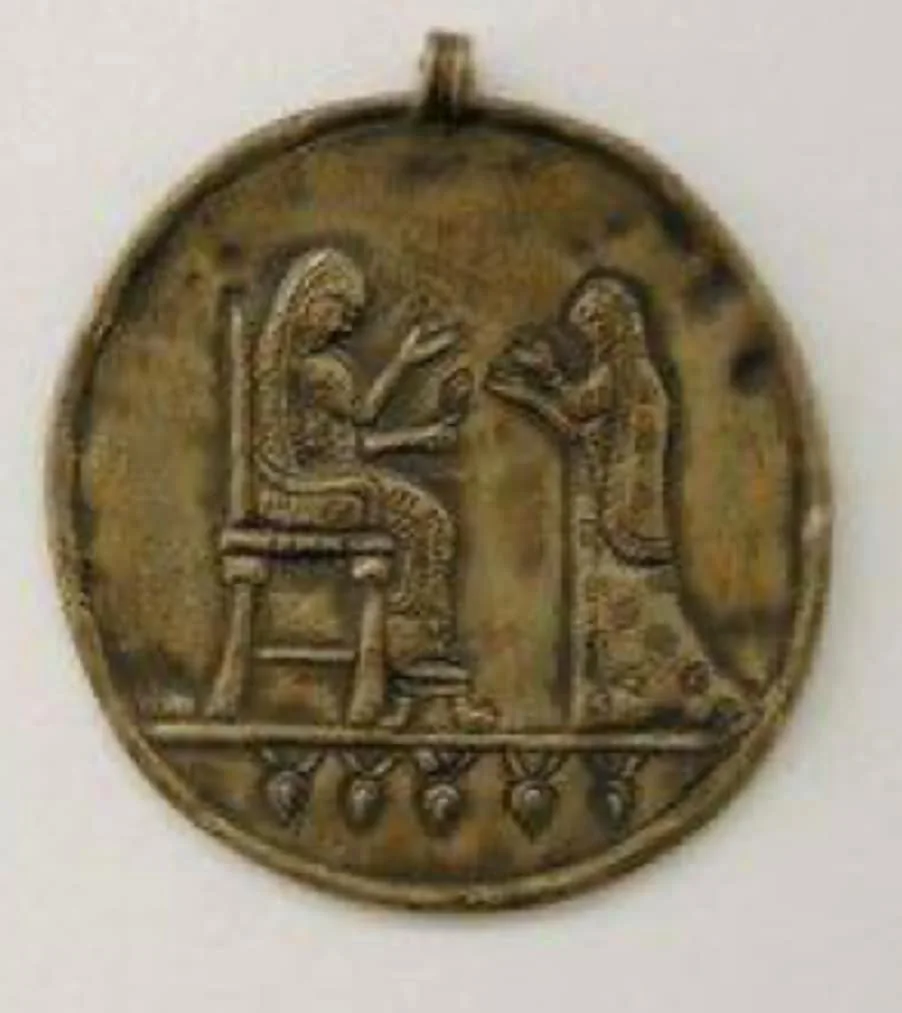
The image shows an Urartian bronze belt dated approximately to the 8th–7th centuries BC. The Urartian kingdom, which existed in the Iron Age in the Armenian Highlands around Lake Van, was known for its bronze work.
The belt is made of bronze using the techniques of chasing and repoussé, with the relief pushed out from the inside. Urartian belts are usually decorated with mythological and religious scenes, with images of gods, animals, chariots, warriors, hunting and rituals. It is believed that they were part of a warrior’s equipment and also served as amulets. Urartian art was strongly influenced by neighbouring Assyria but had its own characteristic features: stricter adherence to the canon and a preference for ornament over narrative scenes.
At the top is the whole belt; below is an enlarged section with round raised bosses, square motifs and images of winged animals.