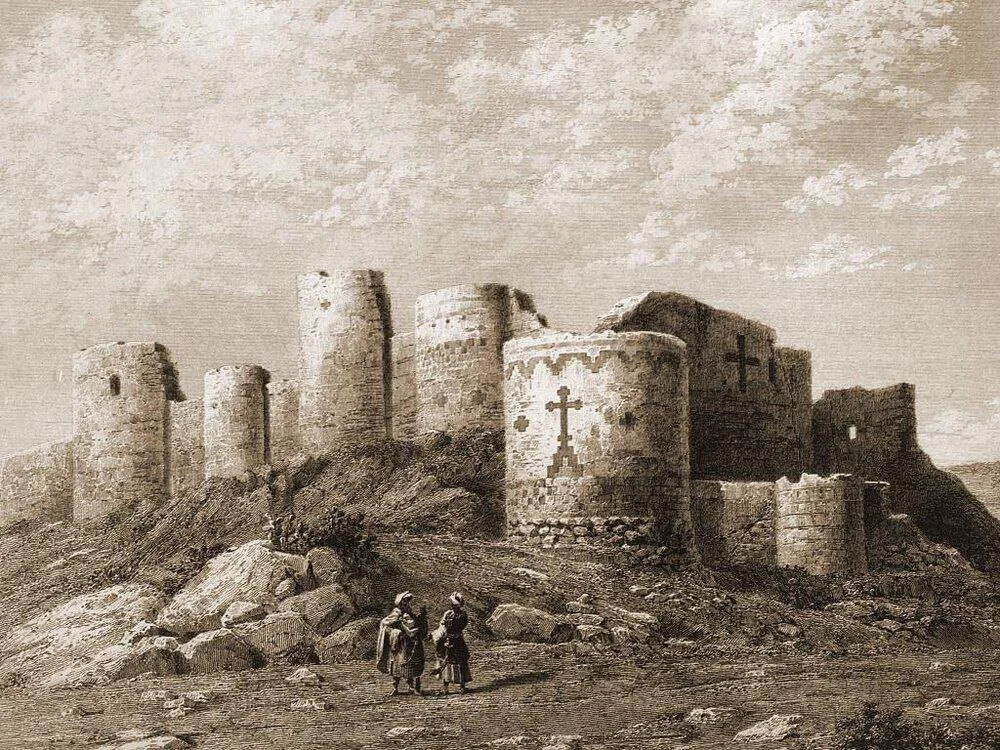
The walls of Ani: engraving by Charles Texier, 1842
An engraving by Charles Texier showing the walls of Ani, 1842. Stone walls with round towers can be seen; one of the towers bears a large cross. In the foreground, people are standing on a rocky slope.
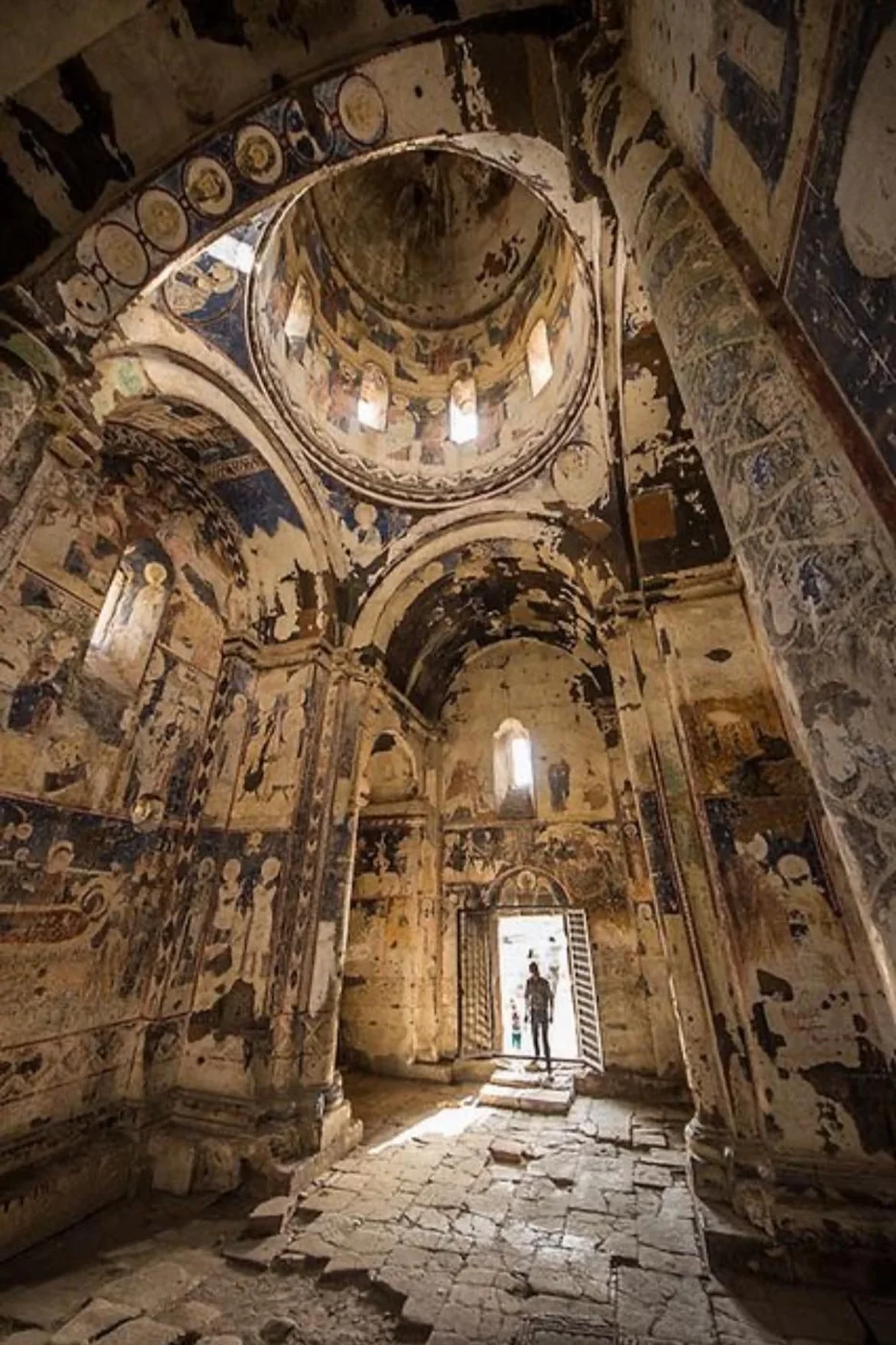
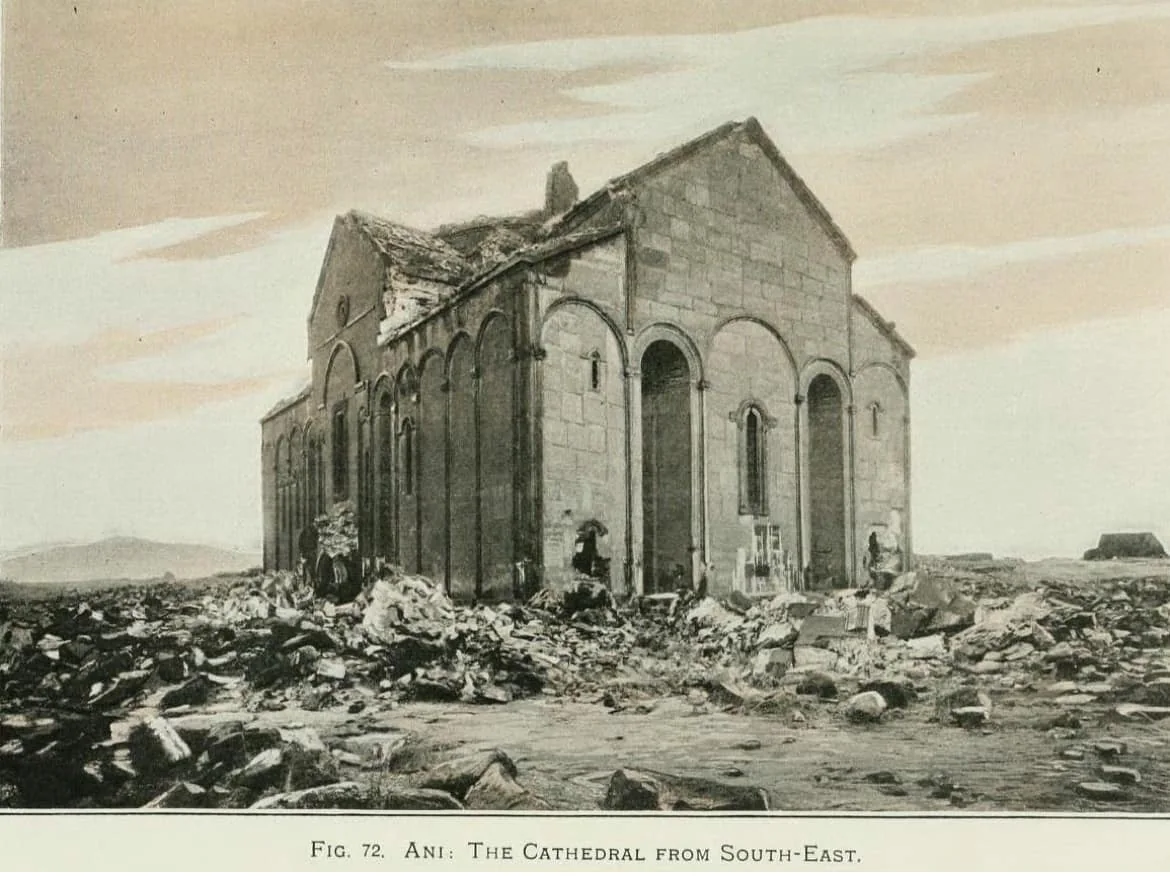
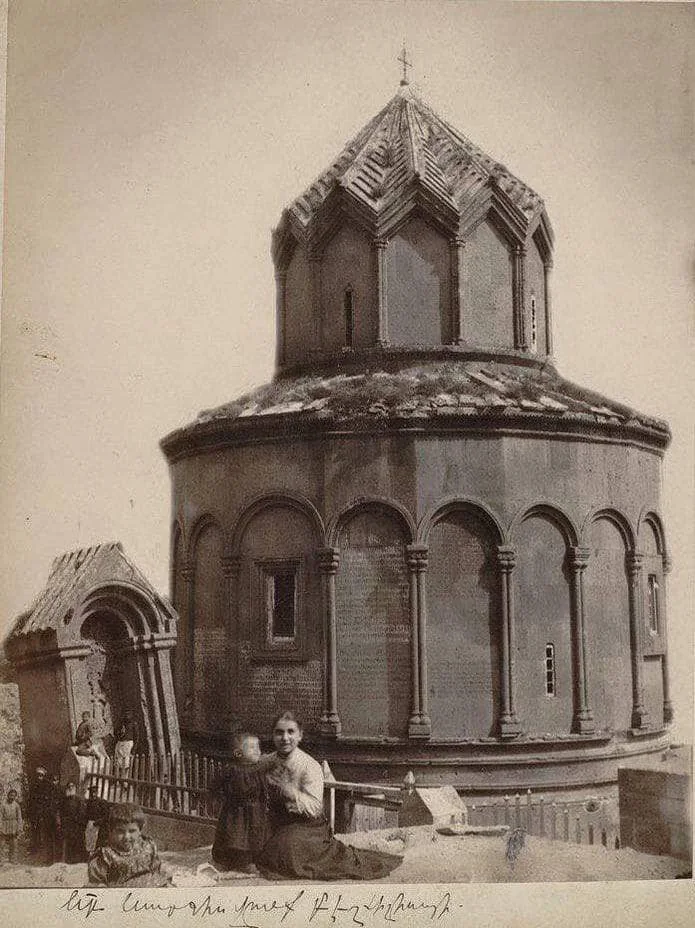
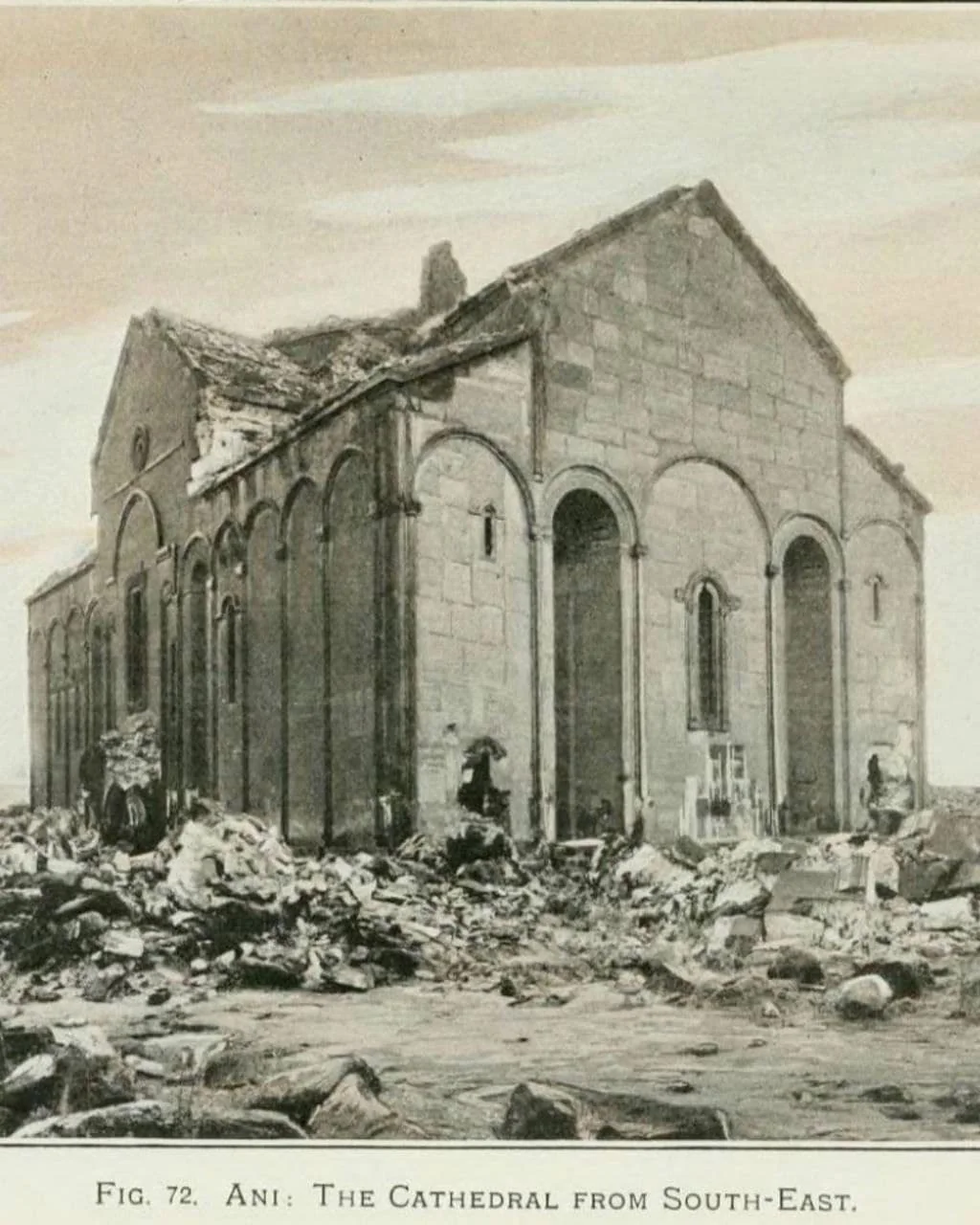
Ani lies in historical Armenia, in the east of present-day Turkey, and is one of the most remarkable architectural and cultural monuments of the Middle Ages. It was founded in the 3rd century as a small settlement and reached its height in the 10th–11th centuries as the capital of the Bagratid kingdom of Armenia. The city was an important centre of trade and culture, famous for its churches, fortifications and houses.
In the 13th century Ani was captured by the Mongols and in the 15th century by the Ottomans, which led to its decline. By the end of the 16th century the city was almost deserted, and its buildings began to fall into ruin.